Blog social issue
Introduction:
Disable or handicap aren’t only qualified as impairment but mainly “social problem”
– 3 Different categories of barrier a disability may face in daily life
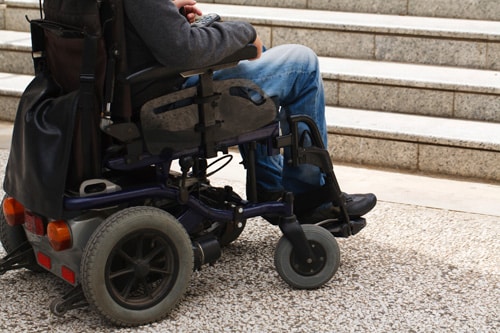
- Physical barriers = chronic fatigue or chronic pain. For example when a building has steps, my wheelchair cannot access it and they’re therefore disabled but they’re enable if there are lift or ramps
- Attitudinal barriers = Behaviors of other non-disable citizens and lack of patience (for example from the article when I roll up the London bus sometimes the driver feel overwhelmed at the need to press a button to activate the ramp when their attitude is around my needs being additional difficulty , I am disabled
- Organization barriers = they could be refused from some organization due to physical limit and by the “reasonable adjustments” (as part of the Disability discrimination Act)
However with more media involvement in these social issues “disable participatory” is created (Ways of approaching and defining disability vary, but here we take a social, cultural and political approach that is influenced by critical disability studies, as well as media and cultural studies , sociology, and science and technology studies
A lot of media organization has been founded to encourage disable people’s role in society especially in Australia like – Radio for the Print Handicapped, or organizations that caption television with subtitles or describe it with audio (the former Australian Captioning Centre was one of these), or lobby, research and advocacy groups such as the Australian organization Media Access or a long-standing coalition of groups who have worked on telecommunications, mobile and internet and disability (Access to media, enabled through technology, empowers people of all abilities to be more independent, to gain knowledge, make their own informed choices, and be active members of our society.)
On the other to strengthen disable participation in media the rise of alternative media (are media that differ from established or dominant types of media in terms of their content, production, or distribution. Alternative media take many forms including print, audio, video, and Internet and street art.) .
These are new ways ‘to author, communicate, consume, and exchange in their preferred medium or media. Whether the use of internet radio and audio blogging by Blind people, or video and sign language blogging by Deaf people, text blogging by people with Autism, or many other kinds of blogs that allow for different styles of communication and for disability to be represented in different ways.
So we will have to look further and learn which platform allow disable people to post their blog or artwork.
Politic of disability participation:
In the arc of these developments, the use of blogs, websites and associated online platforms by mainstream organizations has played a unique, pivotal role, and merits dedicated examination. In particular, the sites Ouch! (BBC) and Ramp up (ABC) bring together content from across the media platforms of their public broadcasters with op-ed pieces posted by editors and disability writers.
Here we will focus especially on ABC ramp up website and its efficiency.
Ramp Up was established by the ABC in 2010 as a participatory media space where people with disability could share ‘stories … truths [and] resources … to ramp up the conversation about disability in Australia’ (Young, 2010). It was envisaged as a place where people with disability could finally have their say in a largely unsympathetic media environment. Founding Editor Stella Young urged Australians with disability to consider the site their space and to help shape a new disability media agenda.
Who is Stella Young?
Young was born in 1982 at Stawell, Victoria. She was born with osteogenesis imperfecta (brittle bone disease, is a group of genetic disorders that mainly affect the bones. It results in bones that break easily.), and used a wheelchair for most of her life. At the age of 14 she audited the accessibility of the main street businesses of her hometown. She was an Australian comedian, journalist and disability rights activist. She had also worked as an educator in public programs at Melbourne Museum, and hosted eight seasons of “No Limits”, a disable culture program on community television station channel 31. She was known especially for her famous quote in TEDxSydney talk in 2014. During the speech she deconstructed society habit of turning disabled people into what she called “inspiration porn” (the portrayal of people with disabilities as inspirational solely or in part on the basis of their disability), she said “I’m not your inspiration, thank you very much”.
In Abc Ramp up website’s display we get to see that articles are rather written by psychologist or disable people and is divided into “news”, “opinion”, “ audio” and “blogs” by having the audio’s option the site allow blind people to listen to news and articles which were recorded by
– Presenter: Lynne Malcolm
– Producer: Diane Dean
– Sound Engineer: Andrei Shabunov
In the news categories we could discover a lot of news which are considered as “support” and “encouraging” to those who have difficult conditions living in society for example:
Probe ordered into claim school restrained student with autism in small plywood room
Central Queensland rugby league players find careers as disability support workers
Birthday surprise for young man with a muscular dystrophy
Lifestyle Solutions: Disability service provider being monitored in NSW amid management concerns
Furthermore in the the blog section we could see several articles posted and written by Stella Young herself before she passed away in 2014. The stories she told reveal the deep issues of disable people who are socially and physically excluded. Being disabled herself she could understand better than anyone. For example there is an article in blog section called “Dancing like everyone is watching” telling the moment when Stella went out during the night and attend to a party. She expressed her struggle by saying
“I dance because it’s fun. But I also dance because it’s political.
Just as I am aware of my body in those moments, the way my muscles feel as I move, I’m equally aware of the able-bodied gaze. Heck, I’m aware of it when I’m in the supermarket, on a tram or wheeling through the streets. But there’s something extra at play on the dance floor, and people not only look, they comment”
Also she criticize the fact that non-disable people tend to judge every moves of disable people as “meaningful” , “inspirational” .
“It is not uncommon for someone to stop me while I’m dancing, and tell me what great exercise it must be for “someone like me”. One woman recently commented that it must be “better than rehab”. Because anything physical I do with my body must have a therapeutic or ‘healing’ purpose. I couldn’t possibly just move my body for the sheer joy of it. There’s often a subtle assumption that we disabled folk don’t do things with the same motivations as non-disabled people, as though Normal People Things would not be important or meaningful to me.”
Stella said in her article
“I mostly dance for all the same reasons anyone else does. Because it heals my spirit and fills me with joy”


In most of her articles she would support the idea of “social equality” and “body issues aspect” (sexually discriminate). Stella also writes guideline for disable people within her blogs with article such as “Practicing Pride in the face of exclusion” which said “Genuine inclusion of people with disabilities will never be achieved while we continue to ignore the most basic of access requirements”. Moreover the editor has been political in several articles on the blogs section:
–Stella Young remains opposed to legalizing assisted death in any form
-Support the funding of NDIS (National Disability Insurance Scheme) by doing a petition to government
-Making the Disability Support Pension easier to get with her article “we’re damned by discrimination not the DSP” by telling a story of a young disabled man she met often who didn’t get the jobs he wants
Another section on the website is “opinions” where there are a lot of different people sharing their “opinion” throughout a personal experience or share a guideline on how to handle issues in daily life for example a lot of articles are about “mental health issues” or “intellectual disabilities”. There social article such as “Mental illness doesn’t discriminate, so when it comes to athletes why do we?” or “This is what actually happen with special needs kid in a mainstream class”.
Unfortunately it was announced in the Federal government budget that funding for ABC’s disability news and opinion website, Ramp Up, was discontinued. (The budget paper said, “The government will achieve savings of $1.7m over four years by reducing the number of human rights commissioners by one.) On Twitter UNICEF Australia described the decision as a “devastating outcome” for all Australians.
Disable have to find another ways to get support and paid in a different community platform. How will the site be funded? Should the editorial process be collaborative? Will authors be paid? How much? Should each member’s opinion hold the same weight?
In a sign of the times, a crowd-funding campaign was launched on 10 August 2014 as a way to save the platform and retain control of the media output that people with disabilities helped to create through the ABC’s Ramp Up. However, the campaign fell $7000 short of its target.
The community faced another setback when news hit that Stella Young had passed away at the age of 32 in December 2014.
Harmer also took the opportunity to criticize the ABC for not representing 20 per cent of the Australian community. She argued that a site such as Ramp Up should not be forced to seek out crowd-funding, given that the ABC charter mandates that it must ‘contribute to a sense of national identity’ (Harmer, 2014).

 Social issues